Race Automation
Running a yacht race takes a lot of people. A live tracking system can do much of that work for you — detecting the start, watching every mark rounding, timing the finish and producing the results.
Reducing the Volunteer Burden
Clubs around the world are struggling to find the skilled volunteers needed to run races for their members. A race with ten boats or fewer often needs more volunteers than there are competitors, just to put the race on. Yet if races are regularly cancelled or not scheduled due to lack of volunteers, membership will eventually decline, putting the club's survival at risk.
A solution to this crisis is Race Automation, using an advanced tracking system such as TackTracker.
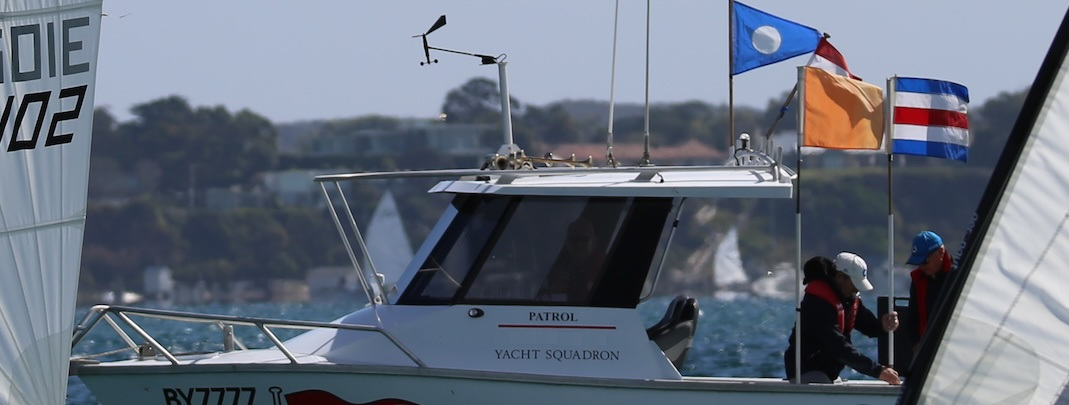
Using TackTracker for Race Automation
With Race Automation, a live tracking system is used to watch the start, monitor course completion and record the finish. Results are automatically generated and published online for competitors to view, along with the race replay.
The need for volunteers can be significantly reduced, or almost eliminated depending on the race format.
- Olympic-style courses with laid marks still require people to lay each mark. A live tracker on each mark is also needed to record its position.
- "Round the sticks" races using fixed marks and start/finish lines at known locations can be fully automated.
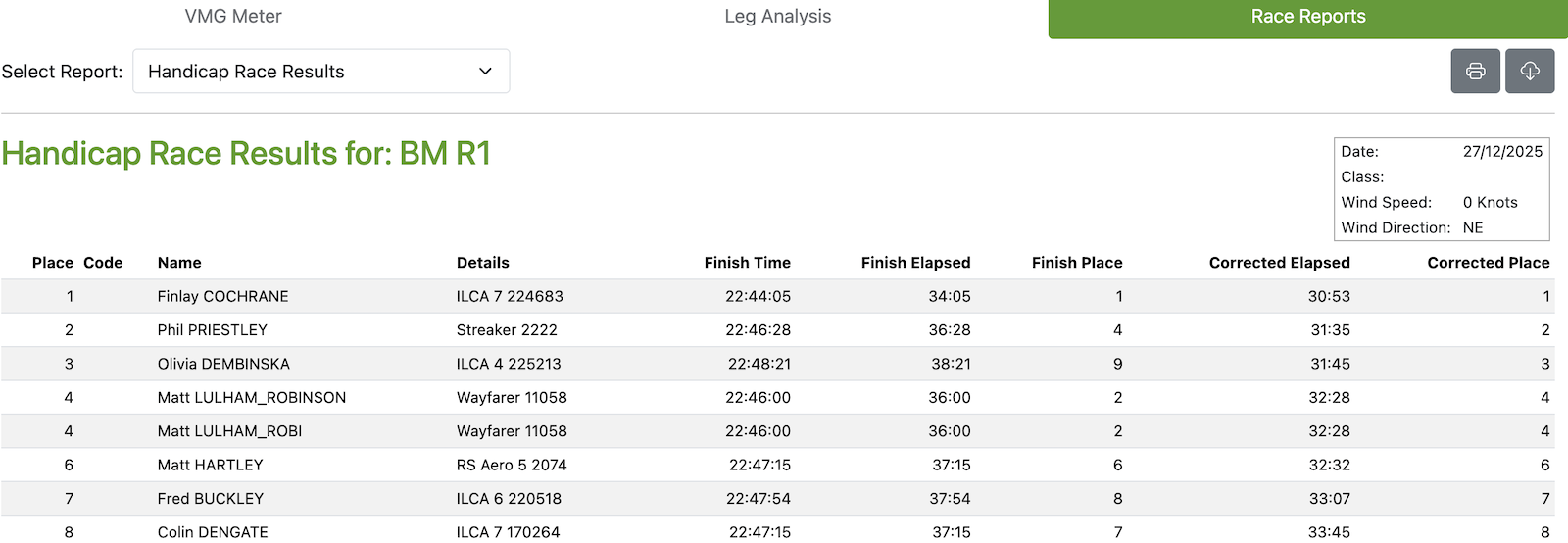
TackTracker detects and records start and finish times as well as all mark roundings. The Race Results report can be automatically generated then published online. Similarly, if handicaps are used, the system can automatically calculate and apply handicap corrections to the final results using the Handicap Race Results report.
TackTracker can detect boats that do not start within the prescribed start time (DNS), boats that cross the start line early (OCS), boats that do not sail the course correctly (NSC) and boats that do not finish (DNF). These codes are automatically recorded and are included in the Race Results report.
Results in Real Time
Because the results are computed continuously rather than assembled afterwards, they do not have to wait for the race to end. The Current Placings report shows the live standing of the fleet on both scratch and handicap while the race is still being sailed. Similarly the TackTracker player has a live leaderboard showing current placings — great to have up and running on a screen in the clubhouse.
When the last boat finishes, the results are already done. Full results, leg placings and corrected times are available immediately, in the browser or as a CSV file for your scoring system. See Race Reports for the full set.
This is a huge time saver and eliminates the manual errors that often plague race management.
But is GPS Accurate Enough?
It is true that standard live trackers can be out by several metres. However, what counts most is relative accuracy, not absolute accuracy. Competitor boats and marks will be using the same satellites, so much of the error is common to all and cancels out.
A tracker can be out by several metres relative to a fixed line.
In practice, the line ends are tracked too. Trackers a few hundred metres apart see almost the same error, so the whole picture shifts together and the boat's error relative to the line is much smaller.
How much this matters to you depends on your situation and the type of event you are running. For example, it may not matter at all for a casual Wednesday evening club race, for which you can't field volunteers anyway. For now, a high profile regatta will likely still need people to record the finish. Even so, race automation tools can be very helpful. The intermediate and final results produced by TackTracker can help inform the race committee and reduce errors, as TackTracker can tell you which boats are approaching the line and in which order.
Looking To The Future
TackTracker is investigating trackers that use real time kinematic (RTK) positioning technology to give centimetre level accuracy. This could be a game changer for Race Automation, as the results from tracking will be consistently more accurate and reliable than a human with a stopwatch.
Other possibilities also emerge. Although most classes will not allow a tracking device to provide material assistance (such as reporting the distance to the start line), it could be used to alert a competitor that they are OCS and need to return or there is a General Recall, for example. In fact, we believe we can completely automate the start process, with the tracker providing all start signals and the tracking system recording the start times and results.
The Race Committee Decides
Race automation is a tool under the control of the race committee, and it is up to the race committee to decide how much automation it wants. Today, TackTracker is often used as an adjunct to traditionally run races. But when there is a need to more fully automate race management, we are ready to work with you.
Getting Started
You need a live tracker for each competing boat, and a live tracker on any mark that moves. Live trackers are described on the Live Tracking page, and you can trial the idea without any tracking hardware using Web Record on a phone.
The course, the start line and the finish line are defined in the Race Editor. For a fixed course you do this once. The live race setup guide walks through it.
Automated results need a Race Reports or Club Regatta licence. Club Regatta also adds multiple fleets with separate start times, handicap management and one-click race control for postponements and general recalls.
If you are thinking about automating your club's racing, please get in touch. We are keen to better understand exactly what you need.
 Web Record